

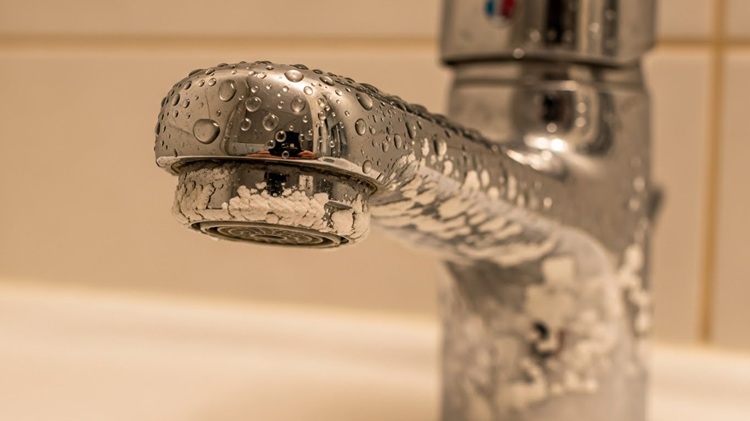
If you’ve ever lived in London, the South East, or much of the Midlands, you’ll know the battle with that chalky white buildup that appears on taps, showerheads, and around the sink. It’s limescale, and it’s the unwelcome side effect of the UK’s notoriously hard water.
Left unchecked, limescale can actually damage fixtures, clog showerheads, and make taps stiff to turn. Landlords expect properties returned in good condition, and limescale-covered fixtures are a quick way to lose part of your deposit.
This guide shows you exactly how to tackle hard water stains and keep them from coming back.
Table of Contents
Get to the Bottom of the Limescale Problem
Understanding what you’re dealing with makes it easier to fight back.
Hard water contains high levels of calcium and magnesium. When water evaporates from surfaces, these minerals are left behind as that distinctive white, chalky residue. The harder your water, the faster limescale accumulates.
You’ll spot it wherever water sits or flows regularly. Look around taps, on shower screens, inside kettles, around sink drains, and in toilet bowls. Once it builds up, it becomes increasingly difficult to remove and can permanently stain or damage surfaces.
For renters, ignoring limescale is risky. Landlords know what hard water does to properties, so they’ll be checking these areas carefully during inspections. Visible limescale suggests general neglect, which can lead to deposit deductions even if the rest of the property is spotless.
Use DIY Remedies for Limescale Removal
You don’t need expensive speciality products to tackle most limescale. A few household items will do the job brilliantly.
White vinegar is your best friend here. Its acidity breaks down calcium and magnesium deposits effectively and safely.
For taps and fixtures, soak a cloth in white vinegar and wrap it around the affected area. Leave it for 30 minutes to an hour—the longer you leave it, the less scrubbing you’ll need to do.
For flat surfaces like sinks, shower trays, or toilet bowls, spray vinegar directly onto the limescale, let it sit, then scrub with a non-scratch scouring pad or brush. The vinegar does the heavy lifting by dissolving the minerals, so you’re not relying purely on elbow grease.
Lemon juice works similarly, thanks to its citric acid content. It’s particularly good for smaller areas or when you want things to smell fresh rather than like a chip shop. Cut a lemon in half and rub it directly onto the limescale around taps or shower fixtures.
For showerheads that are properly clogged, fill a sandwich bag with white vinegar, secure it around the showerhead with an elastic band, and leave it overnight. In the morning, remove the bag and run the shower—you’ll be amazed at the difference in water pressure.
Outsmart Stubborn Stains and Mineral Deposits
When home remedies aren’t cutting it, use commercial limescale removers like Viakal, Cillit Bang Limescale & Shine, or HG Professional Limescale Remover.
Always test on a small hidden area first and follow the instructions. These products are powerful and can damage certain surfaces if misused.
If you’re short on time or the limescale is severe, professional cleaners have industrial-grade descalers and equipment that make quick work of even the worst buildup.
They’ll guarantee the job meets inspection standards, which takes the pressure off during an already stressful move.
Keep Limescale Under Control
Prevention is infinitely easier than cure, especially with hard water stains.
Wipe down wet surfaces after use. Keep a microfibre cloth near the sink and bathroom, and give taps, shower screens, and tiles a quick clean after showering. This removes water droplets before they evaporate and leave minerals behind.
A squeegee is brilliant for shower screens and tiles. A 30-second wipe-down after each shower dramatically reduces limescale buildup. You can pick one up for a few quid at Wilko or Tesco.
For long-term stays, consider a water softener if your landlord allows modifications. More realistically, you can use rinse aids in your dishwasher and washing machine, which help reduce mineral deposits on dishes and in appliances.
Get into a routine of giving limescale-prone areas a quick vinegar treatment every week or two. A spray bottle of diluted white vinegar kept under the sink makes this easy. Regular light cleaning prevents the heavy buildup that requires serious scrubbing later.
Focus on Problem Areas
Some spots are limescale magnets and deserve special focus. For instance, toilet bowls develop unsightly rings at the waterline that become harder to shift the longer they’re left.
Use a limescale-specific toilet cleaner like Harpic Power Plus or pour white vinegar around the bowl, leave it for a few hours, then scrub with a toilet brush.
Kettle interiors get furry with limescale surprisingly quickly in hard water areas. Boil a mixture of equal parts water and white vinegar, leave it for an hour, then rinse thoroughly. Do this monthly, and your kettle will thank you.
Shower door tracks and hinges trap limescale and soap scum in the grooves. Use an old toothbrush dipped in vinegar to get into these tight spaces. These details really matter during inspections.
Kitchen and bathroom taps, especially around the base and spout, show limescale clearly. The vinegar-soaked cloth method works perfectly here, and a quick wipe after each use prevents new buildup.
Call in the Professionals
DIY methods work brilliantly for regular maintenance, but sometimes you need backup.
If you’re facing an inspection and the limescale is extensive, specialised tenancy cleaners are worth every penny. They’ve seen it all before, have commercial-grade products, and know exactly what landlords and letting agents check for.
Many cleaning companies offer guarantees if the landlord isn’t satisfied, they’ll return to fix issues at no extra cost. This peace of mind is invaluable when your deposit is on the line.
Professional cleaners also save you hours of scrubbing when you’re already overwhelmed with packing, redirecting mail, and coordinating moving vans. Sometimes it’s worth paying someone else to handle the hard graft.
Conclusion
Limescale might seem like a minor cosmetic issue, but landlords and letting agents see it as a red flag for general property care. Even if you’ve kept the rest of the flat immaculate, crusty taps and stained shower screens tell a different story.
Whether you tackle it yourself or bring in help, addressing limescale properly shows respect for the property and dramatically improves your chances of getting your full deposit back.